
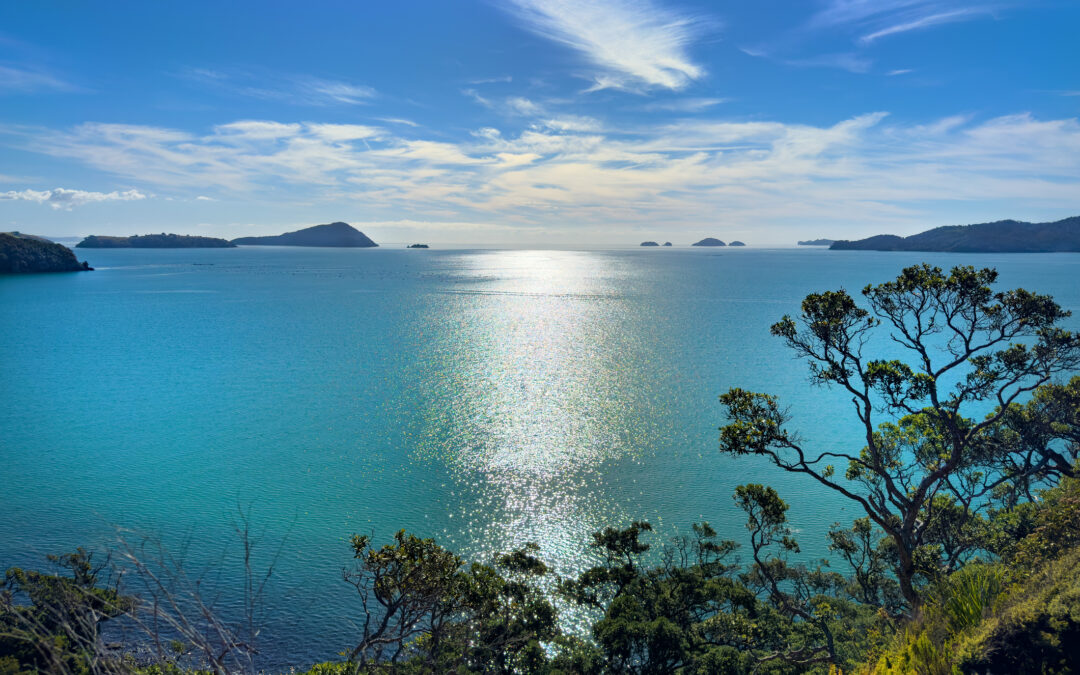
Plenty of travellers who land in Auckland in January treat the city as a runway. They sleep one night and fly south to Queenstown. The Gulf never makes the list. Waiheke Island sits out in the Hauraki Gulf, a short ferry crossing from the downtown waterfront, with vineyards, olive groves and white-sand beaches waiting at the other end. In a New Zealand summer it’s warm, the light lasts, and the Gulf is at its best for swimming and sailing. Summer is also peak season, so if you’re escaping a northern winter between December and February, the Auckland end of the trip needs planning now.
Quick Summary: Key Takeaways
- Close, but a world away: Tourism New Zealand puts the ferry from downtown Auckland at roughly 40 to 45 minutes.
- Base in the city, day on the island: the suitcases stay in Auckland.
- Summer is for the water: beaches, the Gulf and long lunches; the island’s festival season runs March through June.
- Pair it with the north: the Bay of Islands is driest and warmest from December to March, so the two fit one North Island summer loop.
Waiheke Island Is the Easiest Summer Escape From Auckland
Waiheke is the rare island trip that asks almost nothing of your schedule. Tourism New Zealand describes it as a 40-minute ferry ride from downtown Auckland, and the same page’s getting-there panel says 45, so allow the longer figure. You won’t need a flight. You walk onto a ferry in the city and step off into vineyard country.
What you find there is a different pace entirely. Oneroa, Palm Beach and Onetangi are easy, sandy swimming beaches facing the Gulf, there are clifftop tracks and patches of native bush to walk through, and the vineyards climb the hills behind them.
An Auckland Base Turns Waiheke Into a Day, Not a Transfer
We’d base you in central Auckland for two or three nights and make Waiheke one of those days. Packing up and re-checking in on the island costs half a day of exactly the kind of summer weather you came for. A city base saves all of that. Hotel Britomart is the Auckland property on our list.
A town base also gives travellers arriving on a long-haul flight from the United States a soft first stop before anything more demanding, and the evening ends back in the city for dinner.
Unpack once.
→ luxury accommodation in New Zealand
A Waiheke Day Is Built Around Lunch, Beaches and the Gulf
A good Waiheke day has one fixed point, which is a long private lunch at a winery overlooking the Hauraki Gulf. Everything else can bend around it. We arrange those tables in advance, along with the private transfers, so nobody in your party has to choose between a second glass and the drive back to the wharf.
Mornings suit the beaches. At the island’s eastern end, the Stony Batter walk leads past Second World War gun emplacements, a good pick for the history lover in the party. Afternoons can go back to the water.
The Gulf rewards a boat. Private sailing charters head out among the Gulf’s resident dolphins.
Summer Is When Waiheke Shows You the Water
December through February is Waiheke’s beach season, and that’s the version of the island we’d plan around. Summer is New Zealand’s peak season, the days run long, and a swim at Onetangi earns its own slot in the day.
Timing changes the mood. Waiheke’s festival season runs from March through June, so a January visit pairs its winery lunch with swimming and sailing, while a later trip adds the festivals. But neither is wrong. We’d still choose summer for a first visit.
→ the best time to visit New Zealand
Waiheke Pairs Naturally With the Bay of Islands
For a North Island summer, Waiheke and the Bay of Islands make a natural pair. Both are about water, both are an easy reach from Auckland, and the Bay of Islands is at its driest and warmest from December to March.
A shape we like for a first trip is Auckland and Waiheke at the start, then slow days in the Bay of Islands, three hours north by road. Then fly south. It front-loads the gentle days. By the time you reach Fiordland or the Southern Alps, the jet lag is long gone and you’re ready for the bigger days on the itinerary.
→ luxury tours of the Bay of Islands
Book the Summer Pieces Early, Including the Entry Paperwork
Peak-season trips get built from the hardest bookings outward, and in summer that means the city hotel, the private lunches and the charter. Book those first. Then sort the paperwork. Most visitors entering New Zealand on an NZeTA also pay the International Visitor Conservation and Tourism Levy, which Immigration New Zealand raised from NZ$35 to NZ$100 per eligible person from 1 October 2024.
Once you travel, a dedicated consultant and your itinerary app keep every ferry, driver and table in one place, with 24/7 support if a summer storm moves the plan.
→ planning a luxury New Zealand tour
Frequently Asked Questions
Q: How do you get to Waiheke Island from Auckland?
A: By passenger ferry from the downtown Auckland waterfront, a crossing Tourism New Zealand puts at roughly 40 to 45 minutes. A car ferry also crosses if you’d rather bring a vehicle.
Q: When is the best time to visit Waiheke Island?
A: December to February. That’s the window for beaches, swimming and sailing on the Hauraki Gulf. March through June suits travellers who want the island’s festival season.
Q: Do you need a car on Waiheke Island?
A: No. Public buses and taxis run on the island, and on a private itinerary we arrange transfers so the day runs around your lunch booking.
Plan Your New Zealand Summer With Journey Earth
Send us your Auckland arrival date and say whether your group would rather swim or sail, and our consultants will shape the Auckland, Waiheke and Bay of Islands opening around it. Our team plans from 168 James Street, Toowoomba, Queensland 4350, Australia, and the full New Zealand range is on journeyearth.net.