Most Australia trips treat Tasmania as an errand. Fly down from Melbourne, look at Cradle Mountain, eat something excellent in Hobart, fly out. We understand the temptation, because the island looks small on a map of a very large country and there is always Uluru or the reef pulling at the schedule.
It’s the wrong read. Tasmania is where Australia slows down, and the travelers who give it a full week come back talking about it more than anything else on the trip — the wilderness is genuinely wild, the food economy runs on people rather than restaurants, and the Aboriginal cultural work happening there is among the most rewarding in the country. Squeeze it into 48 hours? You’ll see a mountain and a menu.
Quick Summary: Key Takeaways
- Give it a week: Two days buys you Hobart and a photograph. Five to seven days is where Tasmania starts to make sense as a destination in its own right.
- The wilderness is the headline: UNESCO’s Tasmanian Wilderness covers more than 1.58 million hectares — close to a quarter of the state.
- Food is a producer story: Bruny Island oysters, leatherwood honey, Southern Highlands whisky, truffle farms. The good tables are downstream of the farms.
- Palawa culture runs deep: Private workshops in shell stringing and kelp basket weaving with Pakana elders, on ancestral country.
- It pairs naturally with Melbourne: The short hop across Bass Strait makes Tasmania an easy second act rather than a separate expedition.
The Island Is Bigger and Slower Than the Map Suggests
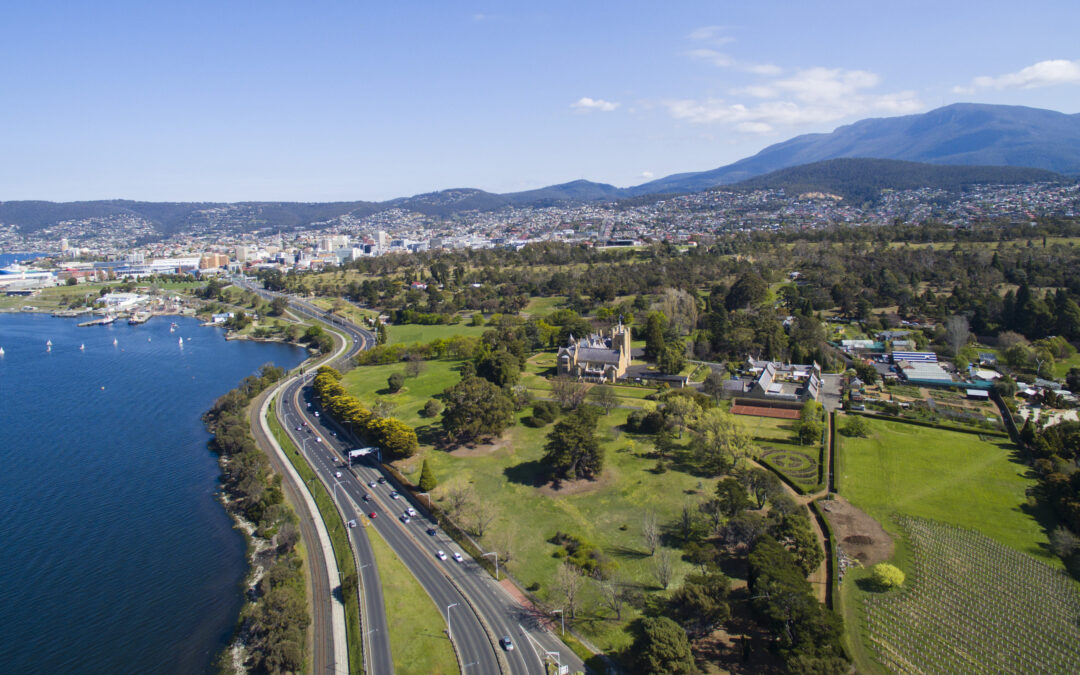
Distances in Tasmania are short and the driving is not. Roads wind, the light changes, and the places worth stopping sit between the places you planned to stop, which is the thing every itinerary built off a map gets wrong before anyone leaves home. UNESCO’s Tasmanian Wilderness World Heritage Area covers more than 1.58 million hectares, almost a quarter of the state. The Tarkine rainforest, up in the northwest, is a separate 1,911 square miles.
Nineteen national parks across roughly 3.7 million acres. You won’t see them. That’s fine — a week here buys depth in two or three, not a lap of the island.
Cradle Mountain After Hours Is a Different Mountain
The best wilderness access on the island happens after the day visitors have gone. Private dusk tours in the World Heritage country around Cradle Mountain, guided by conservationists who are actively working on devil populations and can tell you what the research currently shows, put you in front of animals that are simply not out at two in the afternoon. Endangered Tasmanian devils. Endemic species most travelers only read about.
We shape these around fitness and interest rather than a fixed route. It runs as a private departure, not a scheduled one. Photography-led, geology-led, species-led — the walk changes depending on who’s on it.
→ Australian experiences we design
The Food Story Runs Through Producers, Not Restaurants
Wade into a Bruny Island estuary with a licensed harvester and eat Pacific oysters standing in the water, paired with a cool-climate white. Blend your own single malt in the Southern Highlands. Walk a truffle farm behind a Lagotto and watch the dog do the only part of the job that can’t be faked.
Leatherwood honey. Sea celery. Heritage-method cheese. Tasmania’s reputation was built by small operators who will let you stand in the shed while they work, and that access — not a tasting menu — is the actual reason to eat here rather than in a capital city three hours north.
Palawa Culture Is the Layer Most Itineraries Skip Entirely
Aboriginal Tasmanians have lived on this country for roughly 40,000 years, and the cultural work available to travelers now is a long way past a museum panel. Private sessions with Pakana elders cover traditional shell stringing and kelp basket weaving using ancestral techniques, on the land where those techniques were developed.
Port Arthur, with a historian and archival access, sits on the other side of the same conversation. Convict history and First Nations history are not separate subjects here. Travelers who take on both leave with a far more honest picture of the island than the wilderness alone will ever hand them.
→ what travelers tell us afterwards
Where Tasmania Sits in a Larger Australian Journey
Melbourne is the natural pairing. Cross Bass Strait after a few days of galleries, markets and Victorian food and the contrast does half the work for you — one of Australia’s densest cities set against one of its emptiest landscapes, a short flight apart.
We don’t hand over a route and wish you luck. We ask what you actually want from the island, then arrange the access, the guides and the properties around that answer, because the after-hours sanctuary visits and the elder-led workshops don’t otherwise happen. That’s the job.
Frequently Asked Questions
Q: How many days do you need in Tasmania?
A: Five to seven. Three days gets you Hobart, a national park and a lot of driving. A week lets you split the island — the west and Cradle Mountain on one side, the Tasman Peninsula and Bruny on the other — without spending the trip in the car.
Q: Is Tasmania worth visiting on an Australia trip?
A: Yes, and it is the part travelers most often say they underestimated. It offers something the mainland doesn’t: temperate wilderness at scale, a producer-led food culture, and Aboriginal cultural experiences with an unusually small footprint.
Q: Can you see Tasmanian devils in the wild in Tasmania?
A: Sightings happen, most reliably on private dusk tours in protected areas with conservationists who monitor the populations. Nobody guarantees a wild animal. The odds improve enormously once you are out after the day visitors have left.
Q: What is the best way to combine Tasmania with mainland Australia?
A: Melbourne is the cleanest pairing — a short flight across Bass Strait and a hard contrast in pace. Travelers with more time often run Tasmania after the Red Centre or the reef, so the island reads as the quiet end of the journey rather than the opening.
Start the Conversation About Tasmania
Tasmania is one of the destinations we most enjoy shaping, because almost nothing good there is bookable from a screen. Tell us what you want out of the island — the wilderness, the producers, the cultural work, or all three — and we’ll build the week around it from our office at 168 James Street, Toowoomba, Queensland.