
It is the question that decides the middle of almost every New Zealand itinerary, and travelers usually ask it late, after the lodges are chosen. The Cook Strait sits between the two halves of the country, and how you cross it changes your route, your luggage, and in some cases a whole day. There are three sensible answers and they suit three different trips.
What the Ferry Actually Gives You
The Interislander runs between Wellington and Picton every day, and the sailing takes three and a half hours.
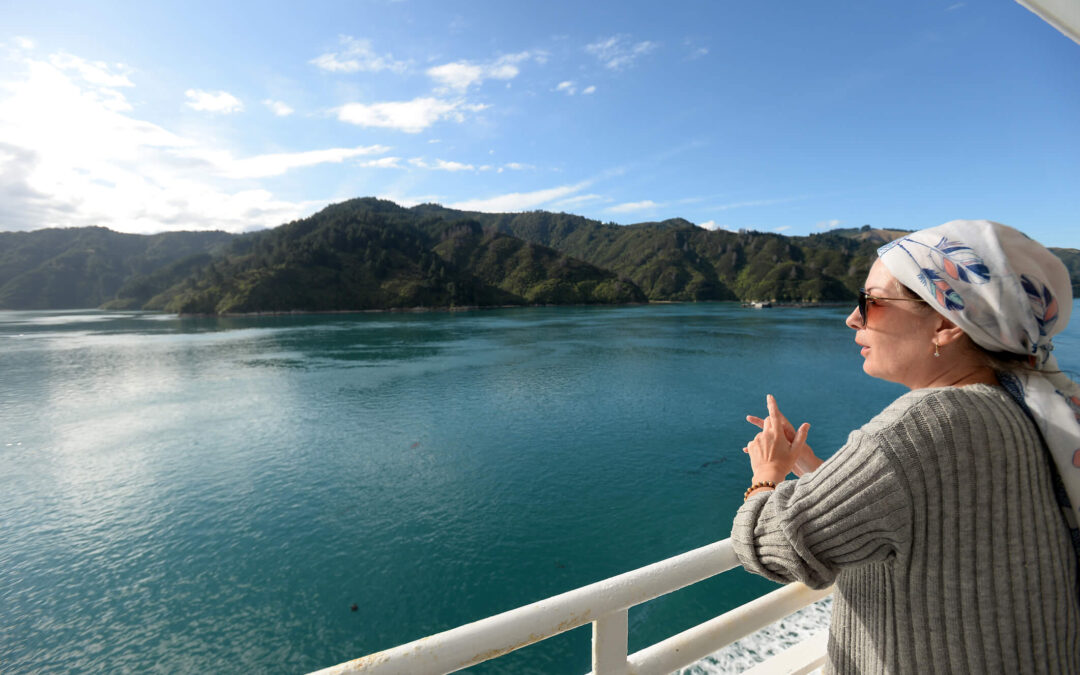
Calling it a transfer undersells it. The open-water section across the strait is the dull part; the last stretch, threading into the Marlborough Sounds, is one of the best hours of scenery in the country and you get it for the price of a crossing you were making anyway. Bays, forested ridges dropping straight into green water, the occasional house with no road to it.
It is also the only option that moves a vehicle, which matters more than travelers expect. Most hire agreements keep their cars off the boat, so the usual arrangement is a swap at the two ports.
→ New Zealand journeys we design
The trade is weather and timing. The strait is exposed and sailings can be delayed, so we never put the ferry on the same day as a long onward drive or a late flight.
When Flying Is the Right Call
Fly when the far end of the trip is the South Island’s lower half, because the ferry lands you in the wrong place for it.
Picton sits at the top of the South Island. If your next stop is Queenstown, the drive from the ferry terminal is most of two days of good driving and a pointless two days of hurried driving. Flying skips it. Queenstown is an hour from Christchurch and an hour and fifty-five minutes from Auckland. The map behaves completely differently once you are in the air.
Short trips tilt the same way. On ten days, a crossing day is ten percent of the holiday.
→ Queenstown and the Southern Alps
The Trains Are a Separate Decision
The scenic rail lines are not substitutes for the crossing. They are things to put on either side of it.
The Northern Explorer runs between Auckland and Wellington, which can deliver you to the ferry. The Coastal Pacific runs south from Picton along a coastline that has seals on the rocks beside the track. The TranzAlpine crosses the Southern Alps between Christchurch and the West Coast and is the one most travelers have heard of. Each one turns a transit day into something worth doing, and each one also removes a rental car from part of your trip.
We book these where the day has room for them. They do not combine well with a tight itinerary, because a train sets its own pace and will not be hurried.
→ experiences we arrange across New Zealand
Vehicles Are the Part People Get Wrong
Most of the real cost of this decision is not the ticket. It is what happens to the car.
Flying between islands usually means two rentals and two sets of paperwork, which suits travelers who want a car only in Otago. Sailing does not remove that, because rental companies generally will not let their cars cross. There are depots at both ports for exactly this reason, and the handover is quick once it is booked in advance.
Where a private driver is handling the ground transport, the question goes away on one side and appears on the other, and we would rather sort that out at the planning stage than at the terminal.
Picton Deserves a Night of Its Own
The one change we suggest more than any other is stopping where the ferry arrives.
The Marlborough Sounds are a destination in their own right and almost nobody treats them as one. The Queen Charlotte Track runs 73.5 kilometers from Meretoto/Ship Cove through to Anakiwa, which the Department of Conservation puts at three to five days on foot. You do not have to walk all of it. Water taxis drop walkers at any bay along the way, so a single good section fills an afternoon and gets you back to a bed.
Marlborough’s wine country starts a short drive inland from the same terminal. That gives the stop a second reason to exist.
→ lodges and retreats across New Zealand
Peak Season Fills the Crossing First
December through February is New Zealand’s summer and its busiest travel window, and the ferry sells out before the lodges do, particularly for anyone carrying a vehicle.
Settle the crossing early instead of leaving it as a gap in the middle of the plan. We build the crossing in at the start, then arrange the nights on either side of it, and that order is the reason our itineraries tend to hold together when the weather does not cooperate.
Frequently Asked Questions
Q: How long does the Cook Strait ferry take?
A: Interislander puts the sailing between Wellington and Picton at three and a half hours. Allow extra at both ends for boarding and for getting a vehicle off.
Q: Is it better to fly or take the ferry in New Zealand?
A: Fly when your South Island plans center on Queenstown or Fiordland and your time is tight. Sail when the scenery is part of the point, or when the Marlborough Sounds are somewhere you want to spend a night.
Q: Can you take a rental car on the Cook Strait ferry?
A: Usually not. Rental agreements here keep the vehicle on one island, so you leave it at the port and collect another on the far side.
The Crossing Shapes Everything Around It
Everything else in a New Zealand itinerary moves around this one decision, so settle it before the lodges are chosen. A short conversation about your dates and the parts of the country that matter most usually settles it in one pass.
We are at 168 James Street in Toowoomba, Queensland, and the planning starts at journeyearth.net.