
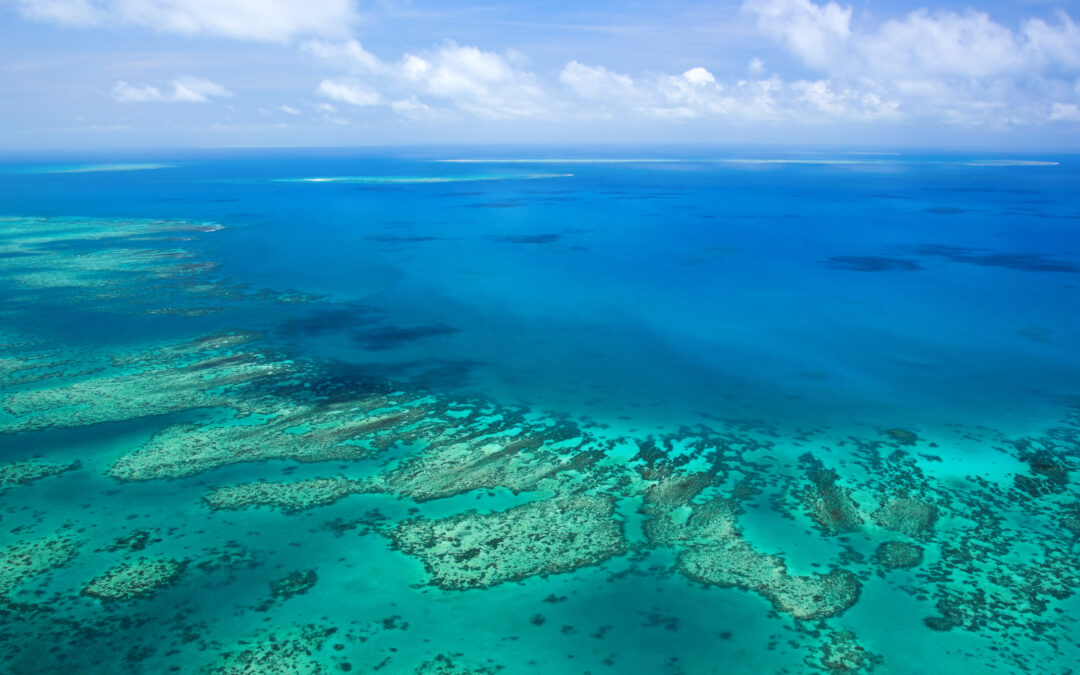
Travelers ask us to book “the Great Barrier Reef” the way they’d ask us to book a hotel. It isn’t one place. It is a coral system spanning 1,400 miles of Queensland coast, and the difference between a crowded pontoon an hour offshore and a small boat working the Ribbon Reefs in the far north is not a matter of degree — they are different holidays, in different water, with different animals in it.
So that one choice does more for your trip than any other. Get it right and you’re floating over coral gardens with nobody else in the water. Get it wrong and you queue for a ladder. Here’s how we think about it.
Quick Summary: Key Takeaways
- The reef is not one destination: 1,400 miles of coast, and the outer reefs hold the majority of the biodiversity.
- Distance offshore is the real variable: Pontoon day trips and outer-reef expeditions produce very different water and very different crowds.
- Where you sleep decides your days: Island sanctuaries put you on the reef at breakfast instead of two hours offshore.
- Conservation access is the differentiator: Coral planting with researchers and sea country tours with Indigenous rangers are not on a booking site.
- Water stays warm year-round: Temperatures on the outer reef sit between 75°F and 84°F, with most diving between 30 and 100 feet.
The Outer Reef and the Day-Trip Reef Are Not the Same Water
Most first-time visitors see the inshore reef, because it is close, cheap and easy to sell. That coral has taken the hardest hit from runoff and heat, and it carries by far the most boat traffic of anywhere in the marine park, which is a combination that shows up the moment your face is in the water. Push further out and the picture changes fast. The pristine outer reefs hold the majority of the system’s biodiversity.
Getting there means a faster vessel and a longer day. We plan around that trade-off honestly. One reef day? We’ll tell you what it can and can’t be. Four, and we’ll spend them where the coral is.
Ribbon Reefs, Cod Hole and Osprey Reef Sit at the Far End of the Effort Curve
The names divers care about are north. Ribbon Reefs. Cod Hole. Osprey Reef. These are the sites that justify the extra transit, and Pixie Pinnacle in particular is the kind of coral garden people spend a career chasing. UNESCO’s World Heritage listing counts some 2,500 individual reefs and over 900 islands across 348,000 square kilometres, inscribed in 1981.
More than 600 coral species and over 1,500 fish species live in that system, roughly double the coral diversity of the Caribbean. Dwarf minke whales turn up on specific vessels during their season. Green turtles, Maori wrasse, reef sharks and hammerheads at the deeper outer sites are everyday sightings rather than lucky ones. Dugongs, if you’re patient.
Where You Sleep Decides What Your Days Look Like
An island sanctuary is a different proposition to a Cairns hotel with a shuttle to the marina. On Lizard Island or at qualia you are already on the reef when you wake up, which removes the two hours a day most reef trips lose to transit and turns a snorkel into something you do before breakfast rather than something you organise. That changes the whole rhythm of a week.
Silky Oaks Lodge pulls the other way, into the Daintree, pairing rainforest days with reef days. Both work. They produce different weeks, and choosing between them is most of the planning conversation.
→ luxury accommodation across Australia
The Conservation Access Is the Part You Can’t Arrange Yourself
Planting coral fragments alongside researchers in high-impact restoration zones, then tracking what happens to them afterwards. Sitting with Kuku Yalanji elders on sea country, learning fishing and navigation techniques that predate every chart on the boat by thousands of years. Night excursions where bioluminescent species surface that daylight hides completely.
None of it sits in a checkout basket. That’s exactly why we build trips around it. Traditional Owner programs receive direct funding through these experiences, so the access and the protection turn out to be the same transaction.
How the Reef Fits Into a Larger Australian Journey
Very few travelers fly to Queensland for the reef alone. It usually sits alongside the Red Centre, or Tasmania, or a long run down the east coast, and the sequencing matters more than people expect, because reef days are physically demanding and stacking them straight against a desert leg makes for a tired middle week that nobody enjoys.
Tell us what else is on the list. We’ll place the reef where it does the most good.
Frequently Asked Questions
Q: What is the best part of the Great Barrier Reef to visit?
A: For divers, the northern outer reefs — Ribbon Reefs, Cod Hole and Osprey Reef — deliver the coral and the marine life the reef is famous for. For travelers who want reef days without long transits, an island stay in the Whitsundays or at Lizard Island puts you on the water immediately.
Q: How many days should you spend on the Great Barrier Reef?
A: Three to four days on or beside the water is the point where the reef stops being a day trip. One day is weather roulette; if conditions are poor, that’s your reef experience. Extra days buy you the outer sites and a second chance at good visibility.
Q: Is the Great Barrier Reef still worth visiting?
A: Yes, with a caveat about where you go. The inshore reef has suffered; the outer reefs still hold extraordinary coral and fish diversity. Choosing well is the difference between disappointment and the best few days of an Australian trip.
Q: How warm is the water on the Great Barrier Reef?
A: Between 75°F and 84°F across the year on the outer reef, with most diving happening between 30 and 100 feet. Comfortable water, and warm enough that long snorkelling sessions are genuinely pleasant.
Let’s Choose Your Stretch of the Reef
Every reef trip we plan starts with the same question — what do you want to be doing when you’re in the water? The answer decides the latitude, the vessel and the bed. Our team works from 168 James Street, Toowoomba, Queensland, and we’re happy to talk it through before anything gets booked.