
Fiordland does not perform on cue. It rains, and the rain is the whole point — the walls of Milford run with hundreds of temporary waterfalls that simply are not there on a dry day, and Mitre Peak rises 5,551 feet straight out of water that is black with tannin. What ruins most people’s visit is not weather. It is arriving at eleven in the morning with four hundred other people who left Queenstown at the same time. Everything we do here is about being somewhere else on that clock.
Designed With You in Mind

- Best months to go: any of them, honestly — Fiordland’s rain is not seasonal, and the waterfalls are the reason you came
- Getting there: four and a half hours by road from Queenstown, or 45 minutes in the air; we fly at least one leg on most itineraries
- How long to stay: a day trip works, an overnight on the water is the version people talk about afterwards
- What makes it worth it: being in the fiord before the day coaches arrive, or still there after they leave
- Worth knowing: vessel accessibility varies enormously between operators, so the boat matters more than the brochure
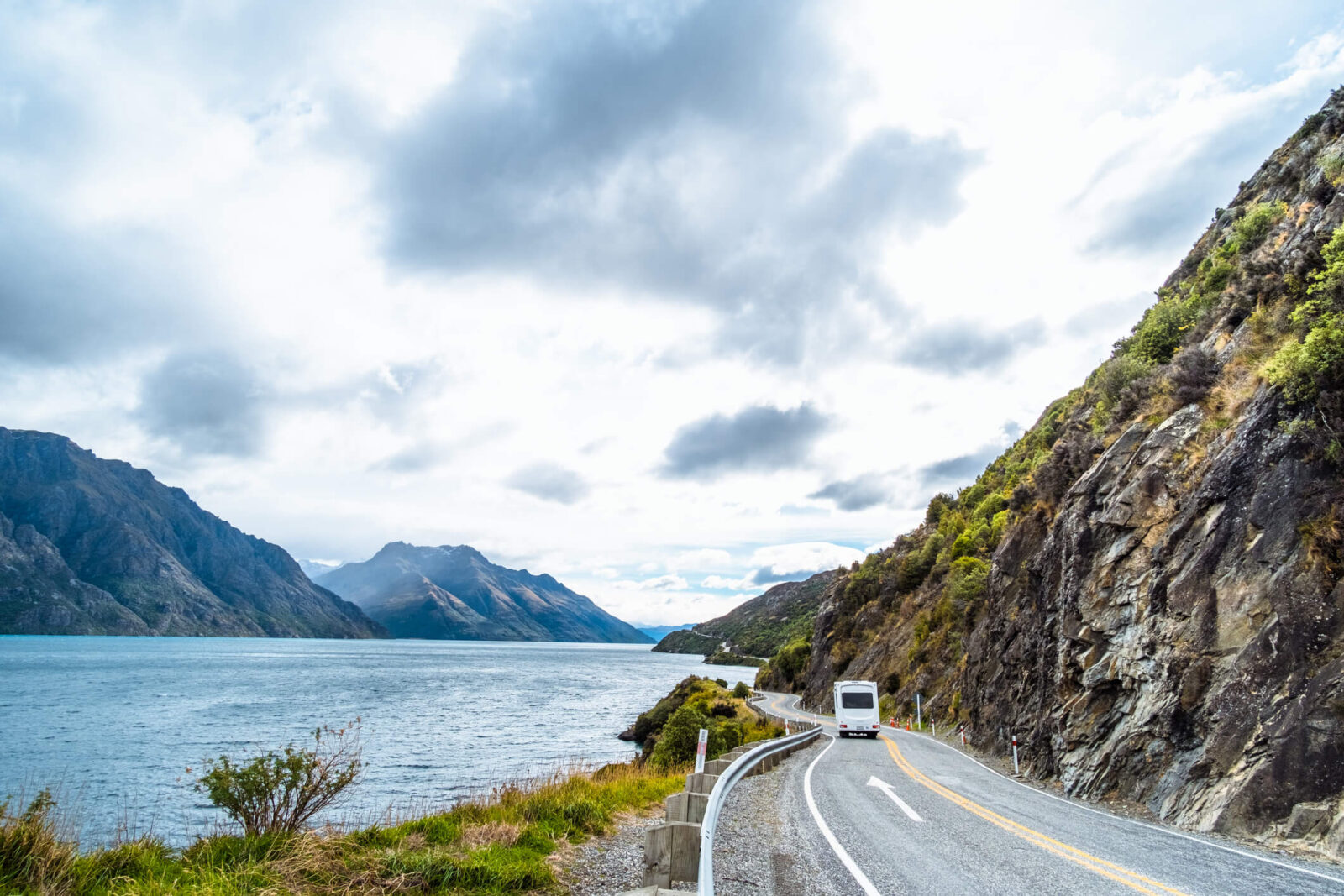
The Road In Is Longer Than Anyone Tells You
That self-drive marathon is the day most visitors buy, but we believe your time is better spent enjoying the scenery. If you prefer to travel by road, a private driver turns a grueling journey into a relaxed, seamless experience where someone else navigates the single-lane Homer Tunnel and summer traffic delays while you take in the views.
Alternatively, fly a leg: a forty-five-minute flight over the Southern Alps and Sutherland Falls transforms a long endurance test into an effortless afternoon.
The Overnight Cruise Is a Different Trip Entirely
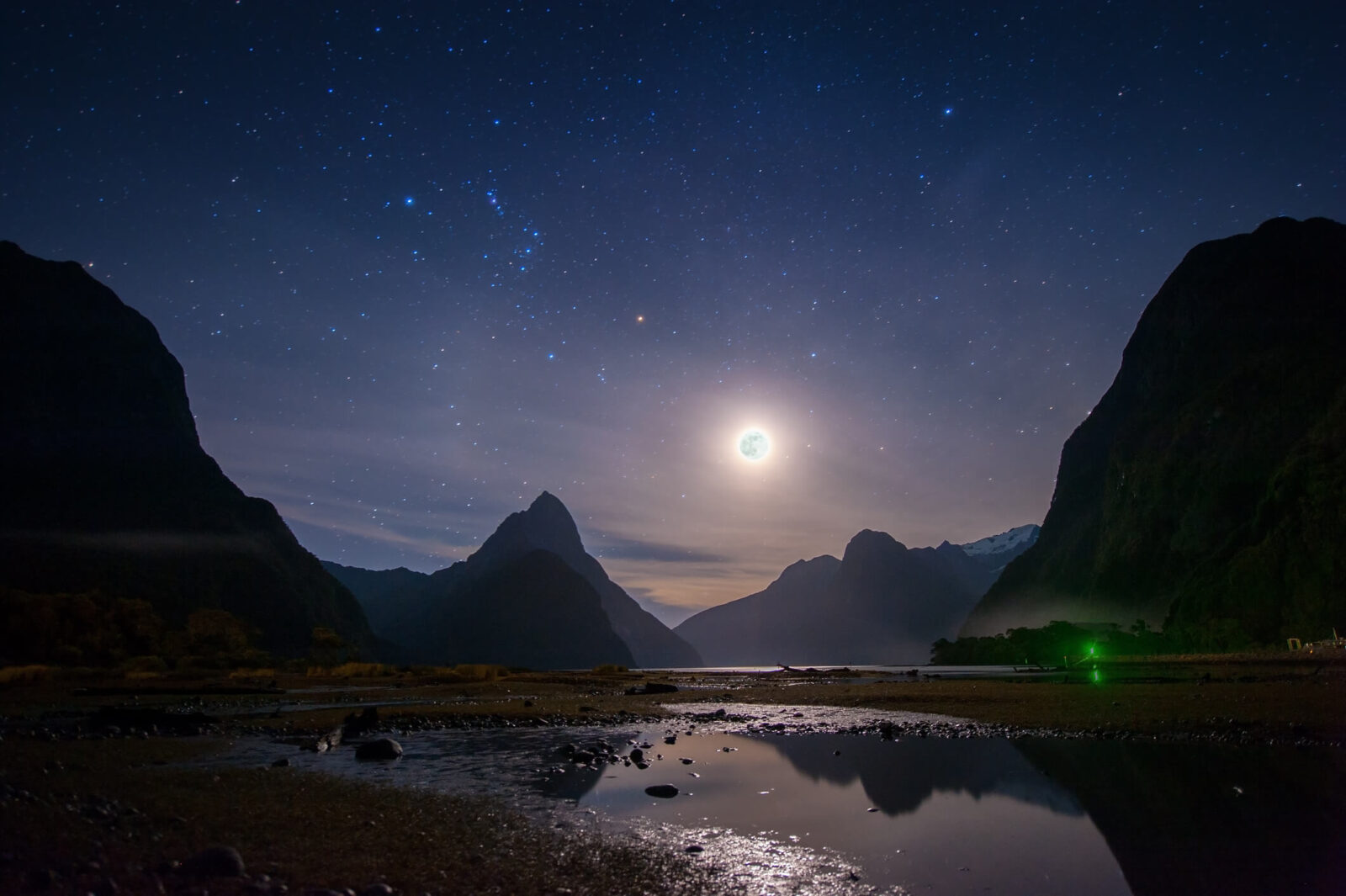
The day boats leave. That is the sentence that matters. The overnight vessels sail in the late afternoon, anchor in Harrison Cove, and give you the fiord at dusk and again at breakfast with nobody else in it — kayaks off the back, stargazing before bed, and the engines off.
Doubtful Sound goes further still, and getting there is half of it: a catamaran across Lake Manapouri, then a coach over the Wilmot Pass, then a fiord three times longer than Milford with a resident pod of bottlenose dolphins and almost no traffic. It takes a day to reach and it repays it.
Rain Is Not the Enemy Here, and the Numbers Say So
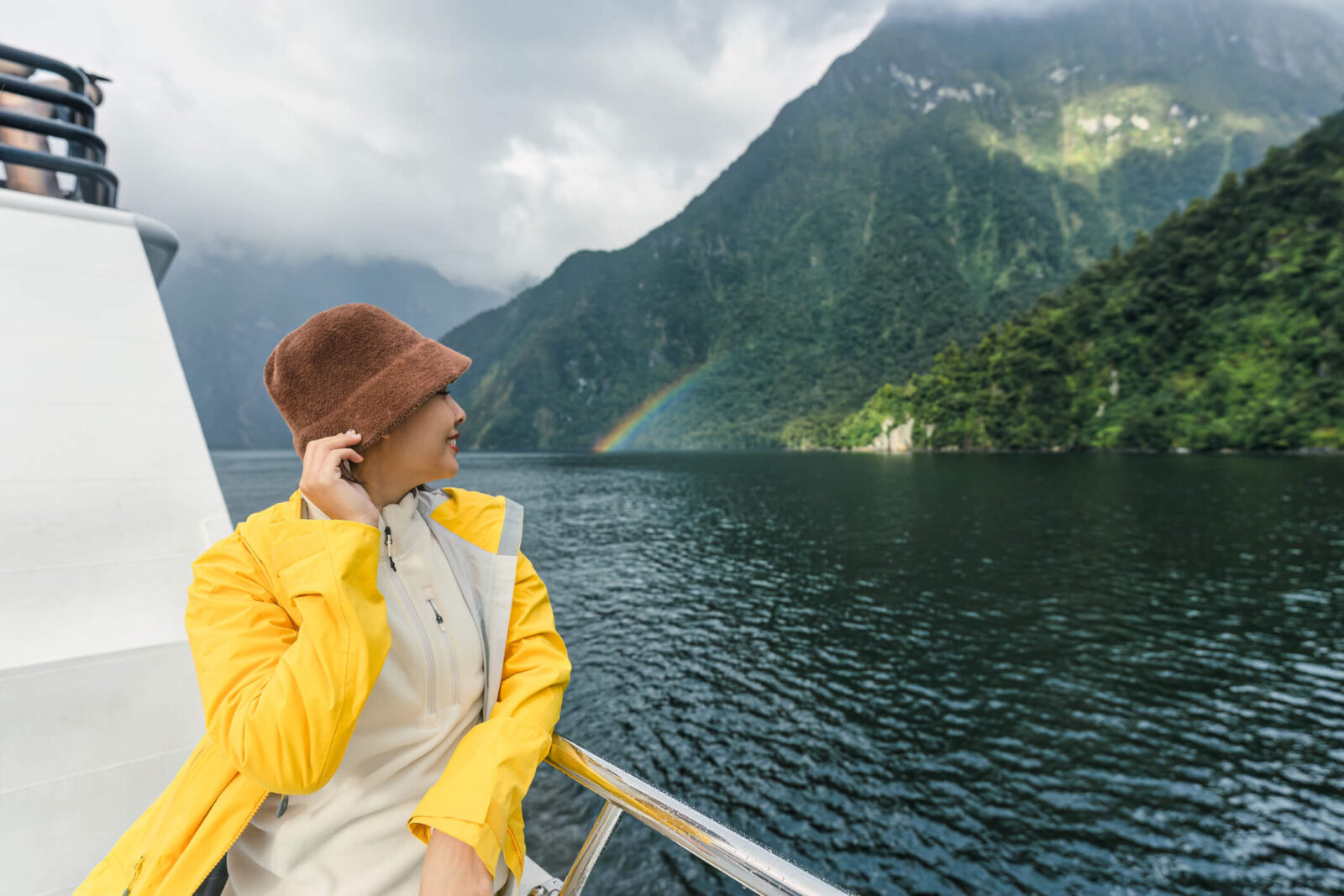
Milford Sound receives 6,545 millimetres of rain a year across 203 rain days, according to NIWA’s 1991–2020 climate normals. Put that beside Queenstown’s 913 millimetres and you understand the landscape.
What surprises people is that it is not a season. Rain days sit between fifteen and nineteen every single month; only the intensity changes. Even June, the driest month on the record, still averages 440 millimetres. So there is no month to “wait for”, and a forecast of rain is not a reason to move the day.
Pack for it and the trip improves. The fiord at its most dramatic is the fiord in weather.
Fiordland Rewards Walkers, but Not Only Serious Ones
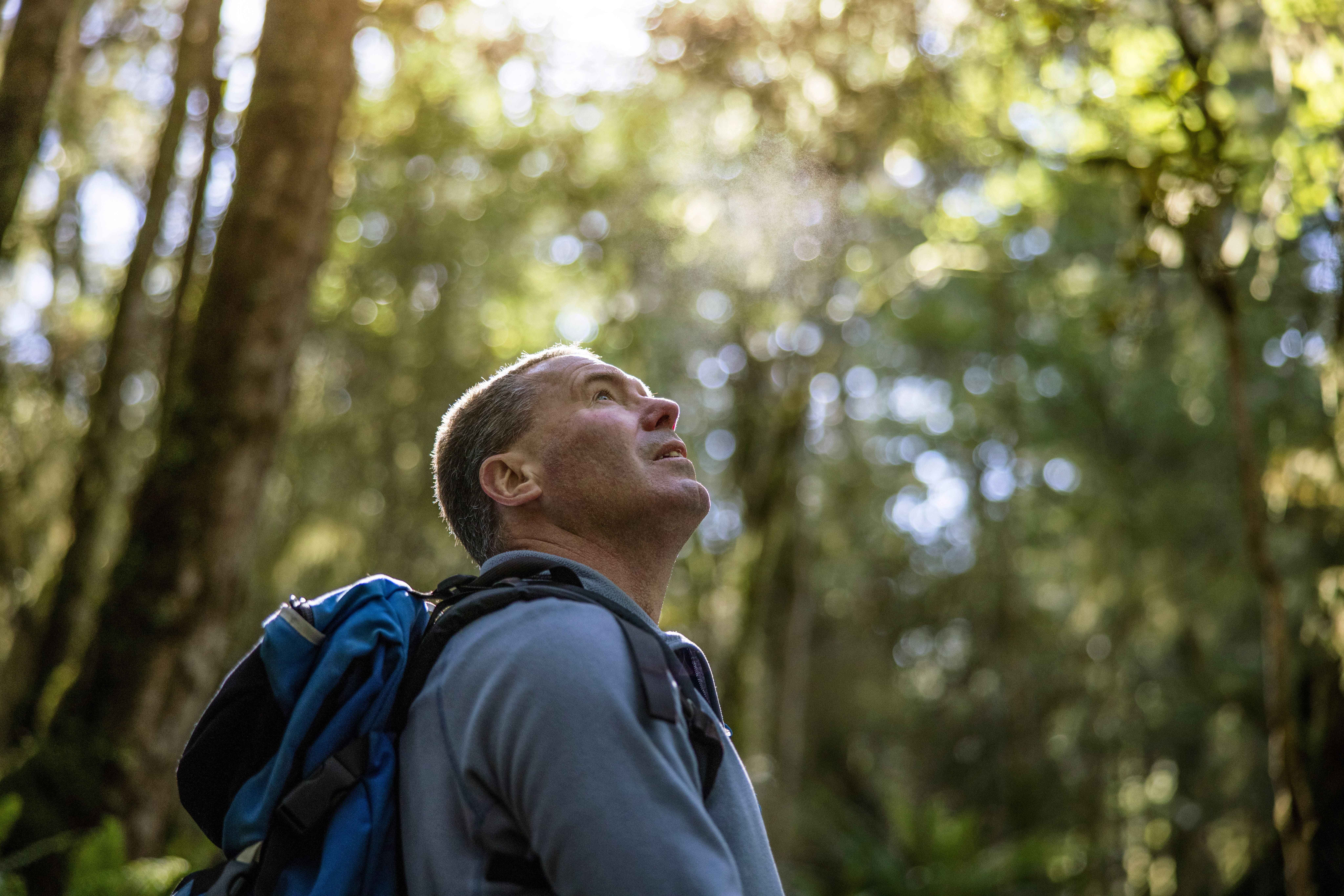
The Milford Track is the famous one, and it is a genuine commitment — the Great Walk season runs 1 November to 30 April, and the Department of Conservation manages avalanche risk across more than fifty-seven paths only inside that window. Outside it, this is alpine terrain with consequences.
Most of our travellers walk something much shorter and see nearly as much. The Lake Gunn Nature Walk is a 45-minute loop the Department grades “Easiest” and specifically recommends for children. Mirror Lakes takes ten minutes. The Milford Foreshore Walk runs half an hour and is one of the walks listed as wheelchair accessible.
That last point matters more than it sounds. Cruise vessels differ sharply — some take mobility scooters on wide ramps, others have no ramp at all, and none has a lift between decks. We book the boat that fits you, not the one with the best marketing.
Where You Sleep Decides How Early You Get In
Te Anau is the practical base, and staying there rather than Queenstown is the single cheapest upgrade to a Fiordland day. It removes two hours from each end of the morning and puts you ahead of the convoy on the Milford road.
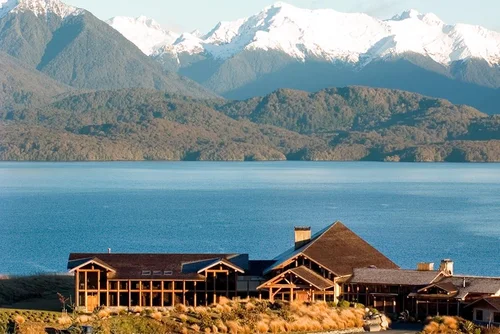
Fiordland Lodge sits on the doorstep of the national park, and for travellers doing the fiord properly it is worth the night.
Frequently Asked Questions About Milford Sound
Is Milford Sound worth it as a day trip from Queenstown?
It is worth going. Whether the day trip is the right shape is another question — it costs nine to ten hours of driving for roughly ninety minutes on the water. If your schedule only allows the day, fly at least one leg. If it allows a night in Te Anau or on the fiord, take that instead.
What is the best time of year to visit Milford Sound?
There is no bad month, because the rain is not seasonal — rain days are near-identical year-round and only the intensity shifts. Summer brings the long daylight and the crowds; winter gives you snow on the peaks and a much quieter fiord. Between June and October the Milford road runs an avalanche programme, which occasionally closes it.
How long is the drive from Queenstown to Milford Sound?
Four and a half hours each way by the transport agency’s own figures, and that excludes photo stops and any wait at the Homer Tunnel. Realistically it is a five-hour drive. Flying takes 45 minutes.
Should we do Milford Sound or Doubtful Sound?
Milford for the drama and the walls; Doubtful for the silence and the scale. Doubtful takes longer to reach and sees a fraction of the visitors, so if you have the day, take it. Couples almost always prefer it once they understand the trade.
Can you visit Milford Sound with limited mobility?
Yes, with the right vessel. Accessibility varies more between boats than between operators, and no Milford vessel has a lift between decks, so we confirm ramps and bathrooms before booking rather than after. The Milford Foreshore Walk is level and listed as wheelchair accessible.