
Best Time to Visit Australia and New Zealand
For one trip that takes in both countries, go between September and November or between March and May. Both sit in the Southern Hemisphere, so their seasons are the reverse of the United States, but they do not peak together. Australia’s reef and outback are best in the cooler months, while New Zealand’s South Island is best in its warmer half, which is why the order you visit them matters as much as the month.
Journey Earth is a private, tailor-made travel company in Toowoomba, Queensland, and we plan both countries as one journey.
Designed With You in Mind

- Spring (September to November): start in Australia, finish in New Zealand
- Autumn (March to May): start in New Zealand, finish in Australia
- December to February: New Zealand plus Sydney, Melbourne and Tasmania, leaving out Australia’s tropical north
- June to August: Australia’s north and the Red Centre, with New Zealand for the ski fields
The Two Countries Are at Their Best in Opposite Halves of the Year

Australia’s best weather comes in the months when New Zealand’s South Island is coldest.
Australia’s tropical north runs on a wet and dry cycle, dry from May to September, while New Zealand’s South Island gets cold and dark in winter, with Queenstown’s average high below 9°C (48°F) in June and July.
A combined trip therefore works best in the months either side, when both countries are good, and neither is at an extreme. That means spring or autumn.
Australia and New Zealand Side by Side, Month by Month
This comparison uses rain days in Darwin, at the top of Australia, from the Bureau of Meteorology, and monthly sunshine hours in Queenstown from NIWA’s 1991–2020 climate normals.
| Month | Darwin rain days | Queenstown sunshine hours | Crowds | Start in |
|---|---|---|---|---|
| January | 19.0 | 236.9 | Summer school holidays in both countries | Either, leaving out the tropics |
| February | 17.8 | 209.3 | New Zealand's schools return in early February | Either, leaving out the tropics |
| March | 16.7 | 180 | Quiet until the Easter break | New Zealand |
| April | 7.3 | 136.2 | Autumn school holidays in both | New Zealand |
| May | 1.6 | 83.8 | Quiet | New Zealand, then Australia's north |
| June | 0.3 | 69.3 | Among New Zealand's quietest weeks | Australia, with New Zealand only for skiing |
| July | 0.2 | 85.2 | Winter school holidays in both | Australia, with New Zealand only for skiing |
| August | 0.3 | 119.5 | Quiet, apart from New Zealand's ski fields | Australia, with New Zealand only for skiing |
| September | 1.7 | 151 | Spring school holidays from mid to late September | Australia |
| October | 5.1 | 197 | Holidays end in early October | Australia |
| November | 10.1 | 217.9 | Quiet | Australia, finishing in New Zealand |
| December | 14.2 | 212.6 | Summer school holidays from mid-December | Either, leaving out the tropics |
In September and October, Darwin’s rain days are low and Queenstown’s sunshine is climbing, so both countries are in good shape. April and May work the same way in reverse, as the north dries out and the South Island still has autumn light. Aim for those months.
In Spring, Start in Australia and Finish in New Zealand

From September to November, see Australia first. The reef is still dry in September and October, and the Red Centre has not yet reached its summer heat, though by October Yulara near Uluru already averages 32.7°C (91°F).
New Zealand warms meanwhile. In Fiordland, the Kepler Track opens in late October and the Milford Track on 1 November. Finishing there means you leave Australia before the heat and reach New Zealand as it warms.

In Autumn, Reverse the Order
From March to May, New Zealand goes first, while the South Island still has warm autumn days and the Kepler and Milford tracks are in season until the end of April.
Then fly north. Australia’s wet season is ending by May, the reef is drying out, and Uluru has cooled well below its summer peak.
Summer and Winter Each Favour One Country
From December to February, New Zealand is the stronger half. Pair it with Australia’s south, where Sydney’s harbour, Melbourne and Tasmania are in full summer, and leave the reef and the Top End for another trip. Both countries’ schools are on their long summer break from mid-December, so the good rooms go early.
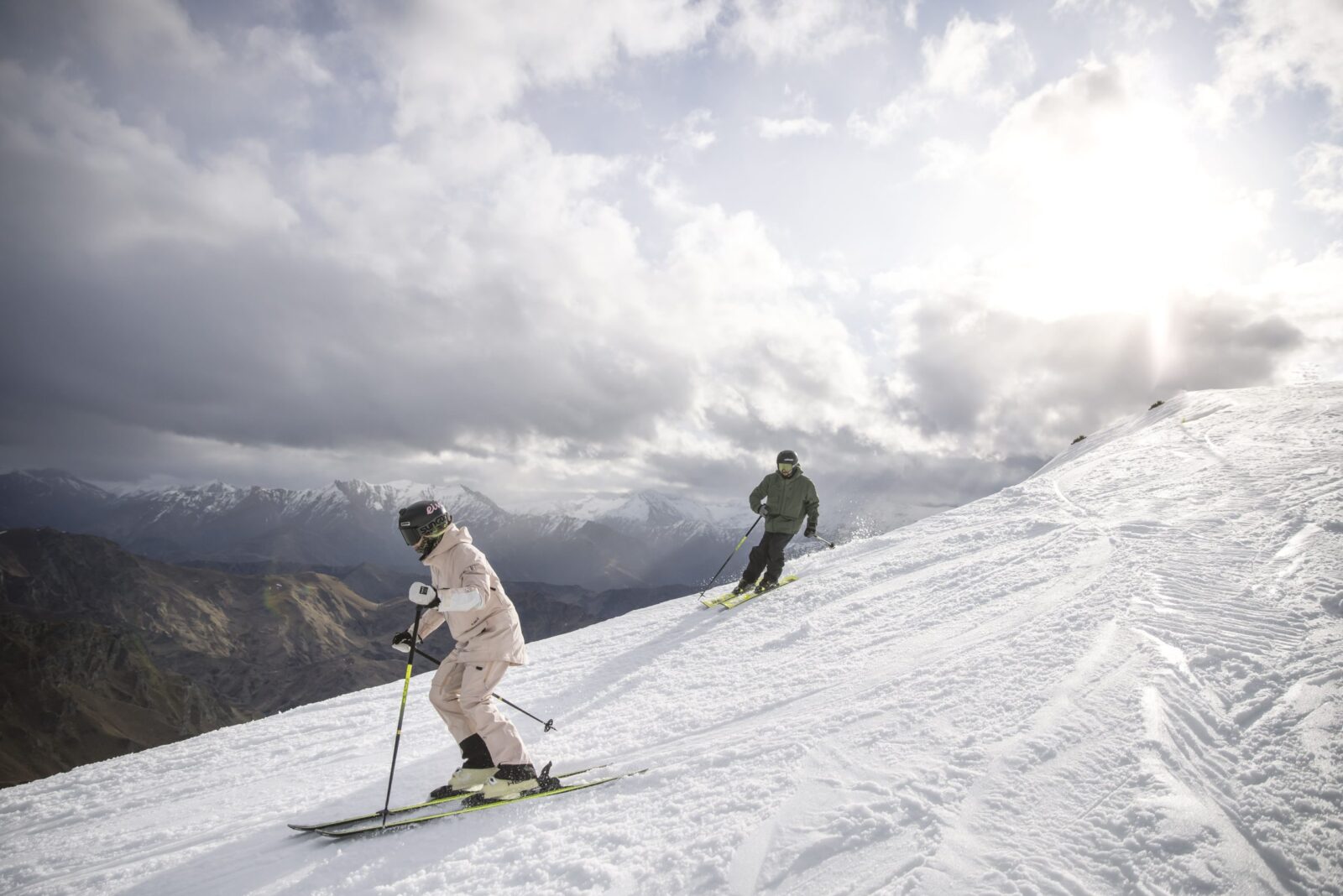
June to August reverses this. Australia’s north and the Red Centre are in their best weather, and New Zealand earns its place if you want the ski fields around Queenstown and Wānaka, or the milder North Island.
Frequently Asked Questions About Visiting
Australia and New Zealand Together
Do Australia and New Zealand have the same seasons?
The calendar seasons match, with summer from December to February in both, but the climates differ. Northern Australia has a tropical wet and dry season, and New Zealand has temperate seasons that get cooler the further south you go.
Which is warmer, Australia or New Zealand?
Australia, by a wide margin in the north. Cairns averages a daily high of 29.1°C (84°F) across the year, against 15.3°C (60°F) in Queenstown. The cities are closer: Sydney averages 21.8°C (71°F) and Auckland 19.2°C (67°F).
Does New Zealand have a wet season like northern Australia?
Not a tropical one. New Zealand’s rain varies by place more than by month: Christchurch averages 617.7 mm a year, about half of Wellington’s 1,319.1 mm, and neither has a wet season like Darwin’s.
What should we pack for Australia and New Zealand in October?
Clothes for two seasons. In October, Cairns averages 29.7°C (85°F) by day while Queenstown averages 15.4°C (60°F), so pack for the tropics and for a cool alpine spring.